

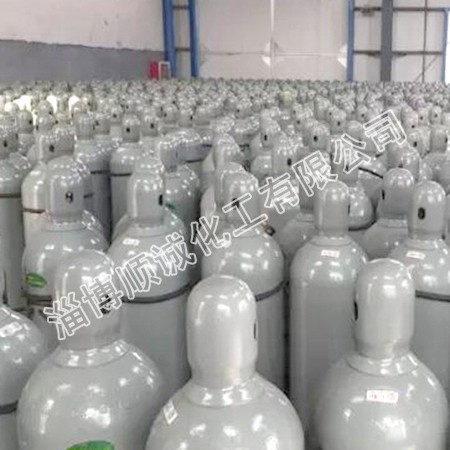
Nitrous oxide is an inorganic substance with the chemical formula N2O. It is a colorless and sweet gas. It is an oxidant that can support combustion under certain conditions, but it is stable at room temperature, has a slight anesthetic effect, and can cause laughter. Its anesthesia was discovered in 1799 by the British chemist Humphrey David. Relevant theories believe that N2O and CO2 molecules have similar structures, so their spatial configuration is linear, and N2O is a polar molecule.
Operation management: airtight operation, providing good natural ventilation conditions. Operators must undergo special training and strictly abide by the operating procedures. Keep away from fire and heat sources, and smoking is strictly prohibited in the workplace. Keep away from flammable and combustible materials. Prevent gas from leaking into the workplace air. Avoid contact with reducing agents. Lightly load and unload during transportation to prevent damage to cylinders and accessories. Equipped with corresponding types and quantities of fire-fighting equipment and leakage emergency treatment equipment.
Storage management: Store in a cool, ventilated warehouse. Keep away from fire and heat sources. The storage temperature should not exceed 30 ℃. It should be stored separately from easily (combustible) combustibles and reducing agents, and avoid mixed storage. The storage area should be equipped with leakage emergency treatment equipment.
Transportation management: When using steel cylinders for transportation, you must wear the safety helmets on the cylinders. Cylinders are generally laid flat, and the mouths of the cylinders should face the same direction without crossing; the height should not exceed the protective fence of the vehicle, and they should be secured with triangular wooden pads to prevent rolling. It is strictly forbidden to mix and transport with combustibles, combustibles, reducing agents, etc. In summer, it should be transported in the morning and evening to prevent sun exposure. It is forbidden to drop off during railway transportation.
Disposal management: Refer to relevant national and local regulations before disposal. The exhaust gas is directly discharged into the atmosphere.


 Customer Service